
- CAS
- Purity
- 537-55-3
- 99%

Location:Home > Pharmaceutical
|
benefits |
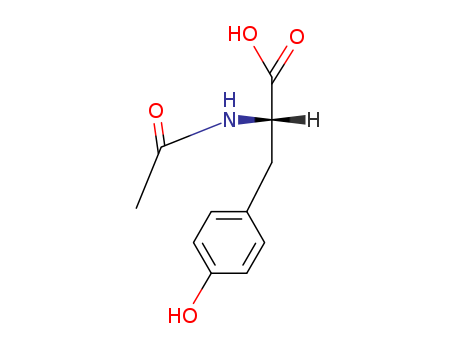
N-Acetyl-L-Tyrosine (NALT) plays a necessary part in the synthesis of dopamine and other hormones in your body. It can boost levels of the neurotransmitters dopamine, norepinephrine and epinephrine. It helps to support higher levels of focus and cognitive function. It can increase working memory and feelings of well-being. |
|
Side effects |
L-tyrosine gets the generally regarded as safe (GRAS) stamp of approval from the FDA. Some side effects of N-Acetyl-L-tyrosine (NALT) include nausea, headache, fatigue, and heartburn. It can be safely taken for extended periods of time. |
|
Definition |
ChEBI: N-acetyl-L-tyrosine is an N-acetyltyrosine in which the chiral centre has L configuration. It has a role as an EC 2.1.1.4 (acetylserotonin O-methyltransferase) inhibitor, a biomarker and a human urinary metabolite. It is a N-acyl-L-tyrosine and a N-acetyltyrosine. It is a conjugate acid of a N-acetyl-L-tyrosinate. |
|
Application |
N-Acetyl-L-tyrosine is a tyrosine derivative with a chemical structure similar to that of an amino acid. It is used as a model system in biochemistry and molecular biology to study the transfer reactions of tyrosine, which are important for energy metabolism, protein synthesis, and metal chelation. N-acetyl-L-tyrosine may be used as an indicator to distinguish neurosyphilis patients from syphilis/non-neurosyphilis patients. N-acetyl-L-tyrosine is a precursor of the essential neurotransmitter dopamine. |
InChI:InChI=1/C11H13NO4/c1-7(13)12-10(11(15)16)6-8-2-4-9(14)5-3-8/h2-5,10,14H,6H2,1H3,(H,12,13)(H,15,16)/p-1/t10-/m0/s1
The catalytic activities of subtilisin B...
The effects of the composition of aqueou...
The binding of competitive inhibitor pro...
Hepsin is a type II transmembrane serine...
Provided herein are heterocyclic compoun...
Photoinduced debenzylations of phenylala...
The radical arylation of the phenolic si...
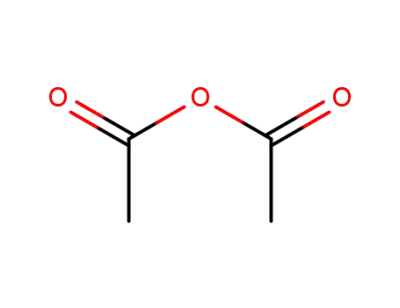
acetic anhydride

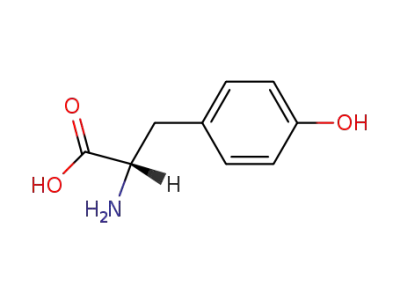
L-tyrosine

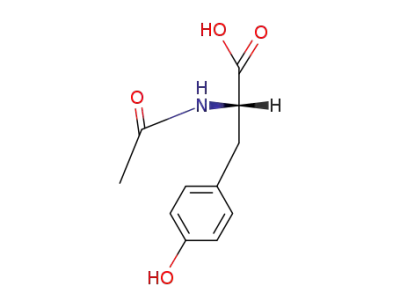
N-acetyl-L-tyrosine
| Conditions | Yield |
|---|---|
|
In
water;
for 4 - 5h;
Heating / reflux;
|
71%
|
|
In
water;
for 4 - 5h;
Heating / reflux;
|
71%
|
|
With
sodium hydroxide;
|
|
|
With
water;
|
|
|
In
water;
|
|
|
In
water;
at 90 - 100 ℃;
for 2h;
|
|
|
In
water;
at 90 - 95 ℃;
for 2h;
|
|
|
With
sodium hydrogencarbonate;
In
water;
at 0 - 20 ℃;
for 2h;
|
|
|
In
methanol;
at 40 ℃;
|
|
|
With
sodium hydroxide;
In
1,4-dioxane; water;
at 0 - 20 ℃;
|
|
|
With
sodium hydroxide;
In
water;
at 20 ℃;
pH=14;
|
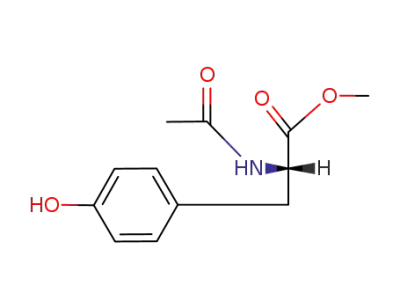
N-acetyl-L-tyrosine methyl ester
N-acetyl-L-tyrosine
| Conditions | Yield |
|---|---|
|
With
lithium hydroxide;
In
tetrahydrofuran; water;
at 65 ℃;
for 3h;
|
84%
|
|
With
sodium hydroxide; ethanol;
|
|
|
N-acetyl-L-tyrosine methyl ester;
With
lithium hydroxide; water;
In
tetrahydrofuran;
at 60 ℃;
for 1h;
With
hydrogenchloride;
In
tetrahydrofuran; water;
at 20 ℃;
pH=4;
Reactivity;
|
|
|
N-acetyl-L-tyrosine methyl ester;
With
lithium hydroxide; water;
In
tetrahydrofuran;
at 60 ℃;
for 1h;
With
hydrogenchloride;
In
tetrahydrofuran; water;
at 20 ℃;
pH=4;
|
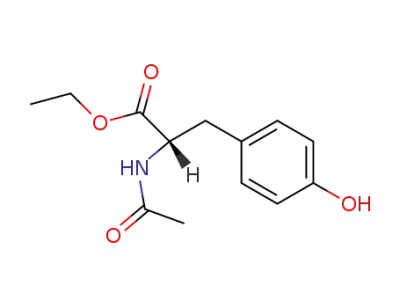
N-acetyl-L-tyrosine ethyl ester
N-acetyl-L-tyrosine methyl ester
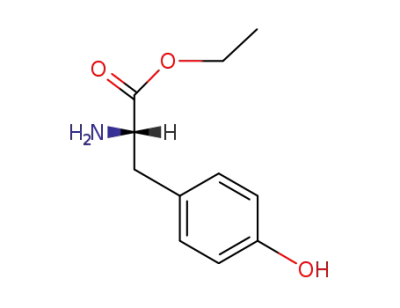
L-tyrosine ethyl ester
acetic anhydride

(S)-N-acetyl-3-(4-methoxyphenyl)alanine methyl ester
N-acetyl-L-tyrosine methyl ester
N-acetyl-L-tyrosine ethyl ester
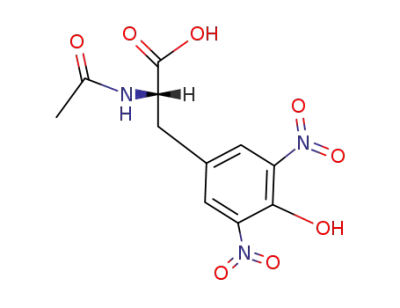
3.5-Dinitro-N -acetyl-L-tyrosin